
Staff Theft & Internal Shrinkage Prevention
Protecting Your Business from Internal Theft with AI-Powered Video Analytics
When retailers think about shoplifting, the focus is often on external threats such as customers or organized retail crime. However, one of the most significant yet often overlooked causes of retail loss is internal shrinkage. Employee theft, unauthorized stock movement, procedural violations, cash handling irregularities, and operational errors can quietly reduce profitability over time, often remaining unnoticed for weeks or even months.
According to retail loss prevention studies, internal shrinkage represents a significant portion of overall inventory losses. Unlike external theft, employee-related incidents are more difficult to detect because staff members understand store layouts, inventory systems, security procedures, and daily operations. Artificial Intelligence (AI) is helping retailers address this challenge by transforming conventional CCTV systems into intelligent monitoring platforms capable of identifying suspicious activities, monitoring operational compliance, and generating real-time alerts whenever predefined business rules are violated.
Understanding Internal Shrinkage
Internal shrinkage refers to inventory or financial losses that originate within the organization. These losses are not always caused by deliberate theft. They may also result from procedural failures, operational negligence, unauthorized access, inventory handling errors, or failure to follow established business processes.
Common causes include:
- Employee theft
- Cash handling irregularities
- Unauthorized stock movement
- Inventory manipulation
- False returns or refunds
- Customer collusion
- Unauthorized discounts
- Stockroom access violations
- Administrative mistakes
Poor operational compliance
Why Internal Theft Is Difficult to Detect
Unlike customer shoplifting, internal theft usually occurs during routine business operations. Employees legitimately access stockrooms, handle merchandise, process refunds, move inventory, operate cash counters, replenish shelves, and enter restricted areas throughout the day. Since these activities appear normal, suspicious behaviour can easily go unnoticed.
Traditional CCTV records these activities but requires managers to spend considerable time reviewing footage after an incident has already occurred. AI changes this approach by continuously analysing operational activities, comparing them with predefined business rules, and highlighting only unusual events that require management attention. This increases the speed and precision of investigations while decreasing manual review.
Common Forms of Employee Theft
Internal shrinkage can take many forms depending on the retail environment.
- Unauthorized Merchandise Removal: Products removed from stockrooms or display areas without proper authorization.
- Cash Theft: Unrecorded transactions or manipulation of payment processes.
- Refund Fraud: Processing false refunds without legitimate customer purchases.
- Unauthorized Discounts and Stock Manipulation: Improper pricing changes or altered inventory records used to conceal losses.
- Customer Collusion: Employees cooperating with customers to bypass security procedures or facilitate theft.

Operational Shrinkage Beyond Theft
Not every inventory loss results from criminal activity. Incorrect stock handling, receiving mistakes, inventory transfer errors, unsecured merchandise, poor documentation, and failure to follow standard operating procedures also contribute to shrinkage. AI monitoring helps identify these operational issues early, allowing businesses to improve processes before they become costly problems.
How AI Helps Prevent Internal Shrinkage
Artificial Intelligence continuously analyses live CCTV footage using computer vision and behavioural analytics. Instead of simply recording events, AI compares operational activities with predefined business rules to identify unusual behaviour, unauthorized access, merchandise movement outside approved procedures, cash counter irregularities, after-hours activity, and operational non-compliance. Immediate alerts enable managers to verify incidents quickly and respond before losses increase.
Monitoring Restricted Areas
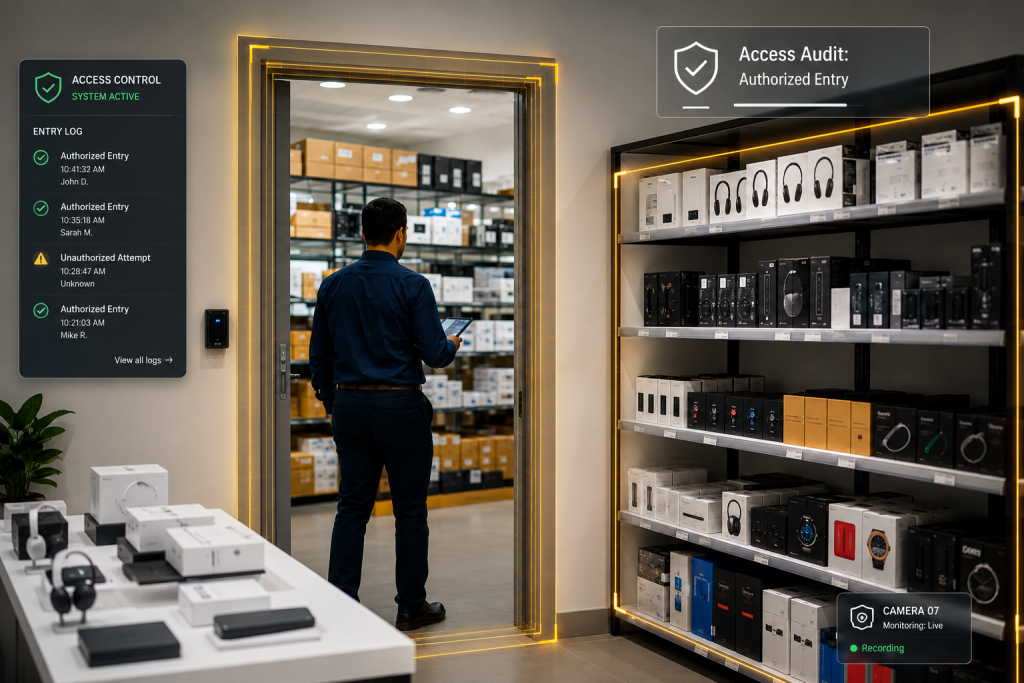
Many retail businesses contain sensitive operational areas requiring controlled access, including stockrooms, jewellery vaults, electronics storage, cash offices, receiving docks, employee entrances, and high-value inventory sections. AI establishes virtual security zones around these locations and continuously monitors access activity. Managers receive immediate notifications whenever unauthorized entry or unusual movement occurs, helping reduce security risks and improve operational control.
Improving Cash Counter Security
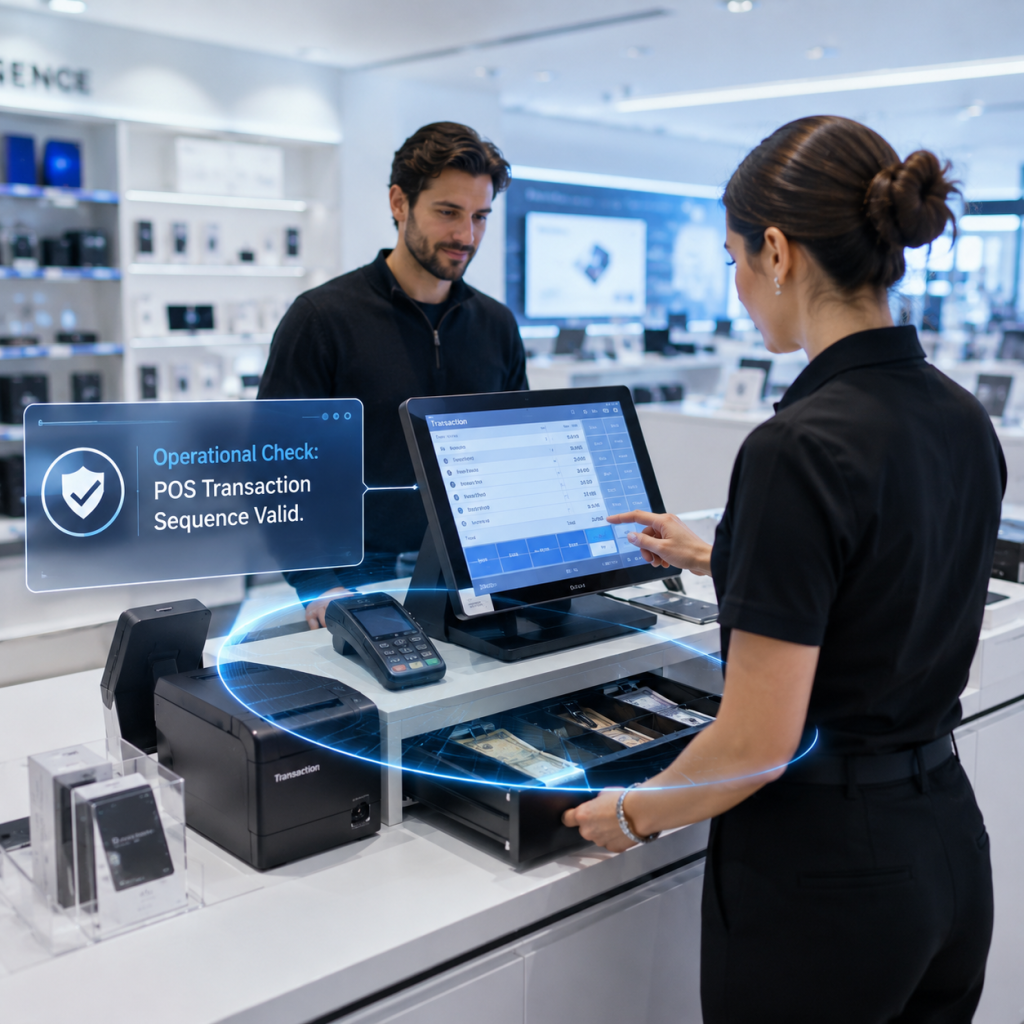
Cash counters remain one of the most sensitive locations within any retail business. AI video analytics supports operational compliance by monitoring unattended billing counters, unauthorized personnel behind POS terminals, suspicious cash drawer activity, after-hours cash handling, and procedural violations. These capabilities improve accountability while providing reliable evidence during investigations.
Detecting Unusual Behaviour
AI assesses patterns of conduct rather than individual acts. Repeated entry into restricted areas, extended time spent in sensitive locations, unusual handling of expensive merchandise, or inventory access without corresponding transactions may indicate operational concerns. Instead of making automatic decisions, AI flags these events for management review, enabling supervisors to investigate objectively using recorded evidence and operational context.
Real-Time Alerts Support Faster Response
One of the greatest advantages of AI monitoring is immediate notification. Alerts typically include the camera location, event description, snapshot images, timestamps, live video access, and alert priority. Managers can quickly verify incidents and respond before operational issues develop into significant financial losses.
Centralized Monitoring Across Multiple Stores
Retailers operating multiple branches often face challenges maintaining consistent operational standards. AI enables centralized monitoring across every location from a single command centre, providing visibility into operational compliance, staff activity, security incidents, inventory handling trends, response times, and recurring procedural violations.
Supporting Employees Through Better Processes
AI is designed to improve transparency rather than replace employees. Objective video evidence protects staff who follow approved procedures while helping managers identify training opportunities and improve operational consistency.
CAPASai: Intelligent Prevention of Internal Shrinkage
CAPASai uses existing CCTV infrastructure with AI-powered video analytics to detect unauthorized access, unusual merchandise movement, restricted-area violations, cash counter irregularities, after-hours activity, and operational non-compliance. Real-time alerts, dashboards, incident reporting, trend analysis, audit trails, and centralized monitoring help retailers strengthen internal controls, reduce shrinkage, improve operational efficiency, and support faster, evidence-based decision-making.
Building a Culture of Accountability
Preventing internal shrinkage requires more than surveillance. By combining clear procedures, employee training, inventory controls, and AI-powered monitoring, retailers can identify risks early, improve compliance, protect valuable assets, strengthen accountability, and enhance long-term operational efficiency and profitability.