
Staff Theft & Internal Shrinkage Prevention - Reduce Internal Losses with AI-Powered Video Analytics
When retailers think about shrinkage, external shoplifting is often the first concern. However, employee theft, operational negligence, inventory errors, and procedural non-compliance account for a significant share of retail losses. These incidents often develop gradually and remain unnoticed until inventory audits reveal the damage.
For retailers handling high-value merchandise such as jewellery, luxury fashion, smartphones, electronics, cosmetics, watches, and premium accessories, even a single internal security incident can result in substantial financial loss. AI-powered video analytics transforms conventional CCTV into an intelligent monitoring system that detects unusual activities, identifies procedural violations, and provides real-time alerts before losses escalate.

Understanding Internal Shrinkage
Internal shrinkage refers to inventory or financial losses originating from within the organization. It generally falls into four categories:
- Employee theft
- Operational process failures
- Administrative and inventory errors
- Employee-customer collusion
The Hidden Cost of Employee Theft
Internal theft affects more than inventory. It can lead to:
- Reduced profit margins
- Increased operating costs
- Inventory discrepancies
- Higher insurance and audit expenses
- Poor stock availability
- Customer dissatisfaction
- Reduced employee morale
- Greater management workload
- Loss of organizational trust
Because these incidents often remain undetected until stock audits, identifying when and how losses occurred becomes increasingly difficult.
Common Types of Internal Theft
Employee theft occurs in different forms depending on the retail environment.
Merchandise Theft
Employees may remove products from stockrooms, warehouses, receiving areas, or display cabinets without authorization. High-value items such as jewellery, smartphones, watches, cosmetics, electronics, and luxury accessories are particularly vulnerable.
Cash Theft
Cash handling fraud may involve:
- Removing cash before reconciliation
- Recording incorrect transaction values
- Delaying transaction entries
- Failing to issue receipts
- Manipulating payment methods
Refund Fraud and Unauthorized Discounts
False refunds, manipulated exchanges, unauthorized discounts, manual price overrides, and misuse of loyalty or employee benefits can gradually reduce revenue if left unnoticed.
Employee-Customer Collusion
Some incidents involve cooperation between employees and customers, including leaving display cabinets unsecured, allowing unauthorized access, processing false transactions, or manipulating inventory records. Because these actions often resemble routine operations, intelligent monitoring is essential for early detection.
Operational Shrinkage Is Equally Important
Not every loss results from dishonest behaviour. Operational shrinkage commonly occurs because of:
- Receiving and dispatch errors
- Inventory transfer discrepancies
- Incorrect stock counting
- Products left unsecured
- Poor documentation
- Failure to follow operating procedures
- Incomplete inventory updates
Why Traditional CCTV Has Limitations
Traditional CCTV systems provide valuable recorded evidence but are largely reactive. Managers often review footage only after discrepancies are discovered, making investigations slow and resource-intensive.
AI-powered surveillance continuously analyses live video, compares activities with predefined business rules, and identifies unusual behaviour as it happens. Instead of simply recording incidents, it enables proactive monitoring and faster response to potential risks.
How AI Helps Prevent Internal Shrinkage
AI-powered video analytics continuously analyses live CCTV footage using computer vision and behavioural analytics. Instead of simply recording activity, it compares employee behaviour with predefined business rules and generates real-time alerts whenever unusual situations require attention.
The system can detect:
- Unauthorized stockroom access
- Restricted area violations
- Merchandise movement outside approved workflows
- Cash counter irregularities
- Unusual handling of expensive products
- After-hours activity
- Extended presence in sensitive areas
- Repeated inventory access without corresponding business transactions
Monitoring High-Risk Areas
Certain locations require enhanced protection because they contain valuable inventory or support critical business operations.
These include:
- Stockrooms
- Jewellery vaults
- Electronics and mobile phone storage
- Premium merchandise rooms
- Cash offices
- Receiving and dispatch areas
- Employee entrances
- Restricted management offices
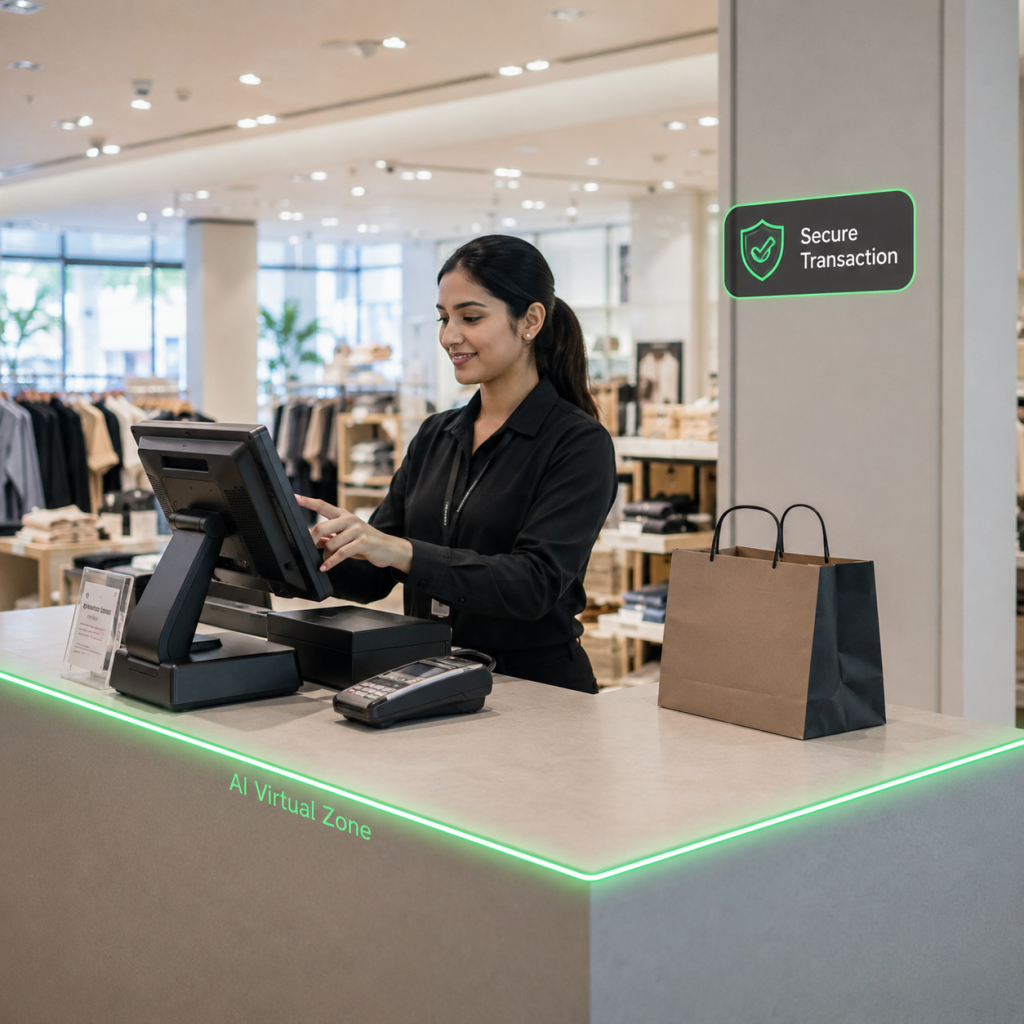
AI establishes virtual security zones around these locations and continuously monitors movement. Managers receive alerts whenever access rules are violated or unusual activity is detected, allowing faster intervention before losses occur.
Cash Counter Monitoring
Cash handling remains one of the most sensitive retail operations. AI video analytics strengthens compliance by monitoring:
- Unattended POS terminals
- Unauthorized personnel behind cash counters
- Delayed billing activity
- Cash handling outside operating hours
- Suspicious activity around payment terminals
- Extended idle periods
Centralized Monitoring Across Multiple Stores
Maintaining consistent operational standards across multiple retail locations can be challenging. AI enables centralized monitoring through a unified command centre, giving management visibility into:
- Store-wise incident trends
- Compliance performance
- Employee activity
- Operational alerts
- Inventory movement patterns
- Repeat procedural violations
- Security performance indicators
Business Intelligence Beyond Security
Modern AI surveillance platforms provide valuable operational insights in addition to security monitoring. Management dashboards help identify recurring risks and improve decision-making through:
- Internal shrinkage trends
- Compliance scores
- Store performance comparisons
- High-risk operational zones
- Incident history
- Alert response analytics
- Operational KPI reporting
CAPASai: Intelligent Prevention of Internal Shrinkage
CAPASai is an AI-powered video analytics platform that helps retailers reduce employee theft, operational shrinkage, and business process violations using existing IP-based surveillance cameras. It continuously analyses live video feeds and applies configurable business rules tailored to each retail environment.
The platform detects unauthorized stockroom access, unusual merchandise movement, restricted area violations, cash counter irregularities, after-hours activity, operational non-compliance, and suspicious behavioural patterns. Real-time alerts enable store managers, security teams, or centralized monitoring centres to respond quickly before losses escalate.
In addition to intelligent monitoring, CAPASai provides centralized multi-store visibility, operational dashboards, incident reporting, audit trails, trend analysis, and detailed analytics that strengthen accountability and internal controls. Rather than replacing employees, it helps management identify risks early while protecting merchandise and improving operational integrity.

Building a Culture of Accountability
Reducing internal shrinkage requires more than surveillance alone. Successful retailers combine ethical leadership, employee training, well-defined operating procedures, inventory discipline, and intelligent technology to create a secure retail environment.
AI-powered video analytics provides the visibility needed to detect risks early, verify incidents objectively, strengthen compliance, and improve internal controls. As retail operations become increasingly complex, intelligent monitoring helps businesses reduce losses, improve efficiency, protect valuable inventory, and build a stronger, more profitable organization