
How AI Detects Shoplifting
Retail theft continues to be one of the biggest challenges for retailers, particularly those selling jewellery, smartphones, electronics, luxury fashion, cosmetics, and other high-value merchandise. While traditional CCTV systems record incidents for later review, they rarely prevent theft while it is happening.
AI-powered video analytics transforms surveillance cameras into intelligent monitoring systems that continuously analyse customer activities, detect suspicious behaviour, and generate real-time alerts before merchandise leaves the store. Rather than accusing customers, AI identifies behavioural patterns that may require staff attention, enabling timely and professional intervention.
From Passive Recording to Intelligent Monitoring
Conventional CCTV records everything but depends on security personnel to review footage after an incident. Monitoring multiple camera feeds continuously is impractical, increasing the risk of suspicious activities being missed.
AI changes this approach by analysing every video frame in real time. Instead of simply storing footage, it continuously evaluates activities across the store and highlights events that require attention. Acting as an intelligent assistant, AI supports security teams with continuous monitoring while reducing fatigue and manual effort.
Understanding Computer Vision
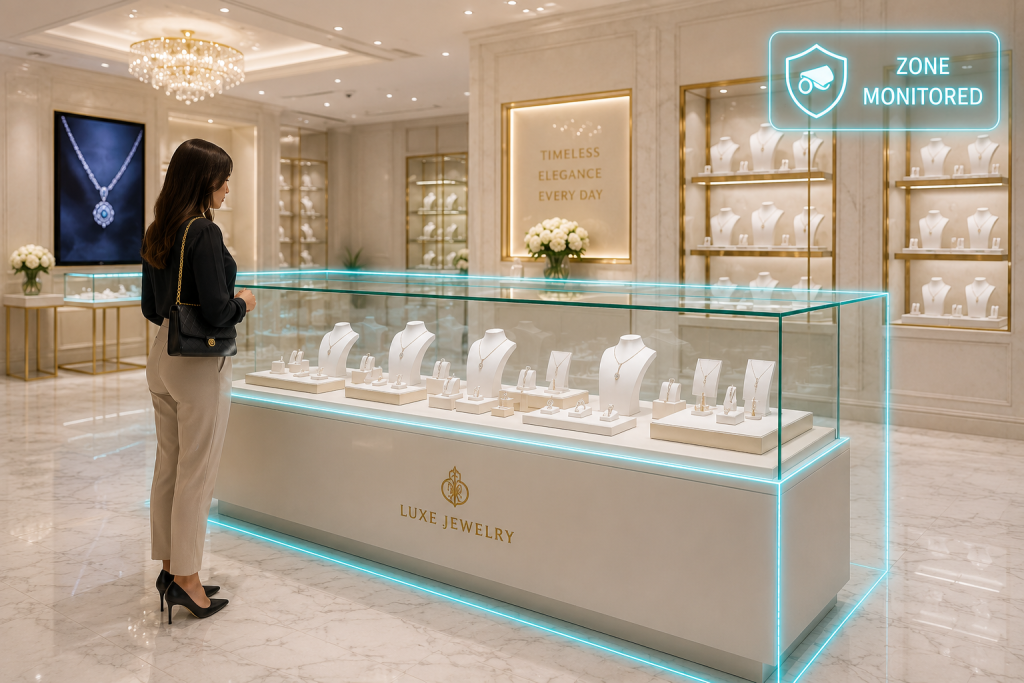
Computer vision is the foundation of AI-powered shoplifting detection. Using deep learning models trained on retail environments, AI can recognise people, shopping baskets, shelves, display cabinets, entrances, exits, restricted areas, and customer movement.
More significantly, it comprehends the long-term interactions between these items. For example, AI can identify repeated visits to high-value displays, prolonged handling of expensive merchandise, or attempts to enter restricted areas, helping retailers detect suspicious behaviour before a theft occurs.
Behaviour Analysis Instead of Facial Recognition
Modern AI focuses on analysing behaviour rather than identifying individuals, helping retailers improve security while respecting privacy.
The system can identify behaviours such as:
- Extended loitering near premium products
- Repeated visits to the same display
- Concealment-like movements
- Attempts to bypass payment areas
- Sudden movement toward exits
- Unauthorized access to staff-only zones
- Unusual after-hours activity
By evaluating behaviour instead of identity, AI reduces unnecessary bias while improving detection accuracy.
Real-Time Video Analytics
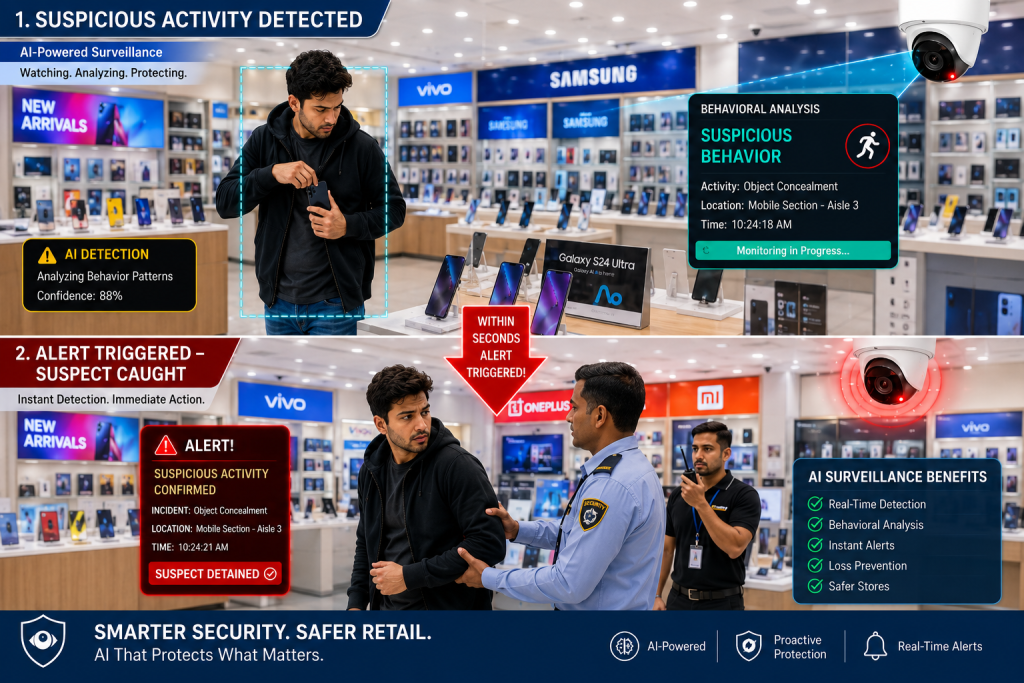
AI continuously analyses real-time CCTV data, comparing each frame to predetermined business principles. When suspicious activity matches configured conditions, the system immediately generates alerts containing:
- Camera location
- Time of occurrence
- Live video or snapshot
- Event description
- Alert priority
Store managers and security personnel can quickly review these alerts and determine the most appropriate response.
Detecting Suspicious Behaviour
AI can recognise several retail situations that may indicate potential theft, including:
- Concealment of merchandise
- Grab-and-run attempts
- Extended loitering near valuable products
- Unauthorized access to restricted areas
- Unusual interaction with display cabinets
By analysing multiple behavioural indicators together rather than relying on a single event, AI significantly improves detection accuracy while reducing unnecessary alerts.
Virtual Security Zones
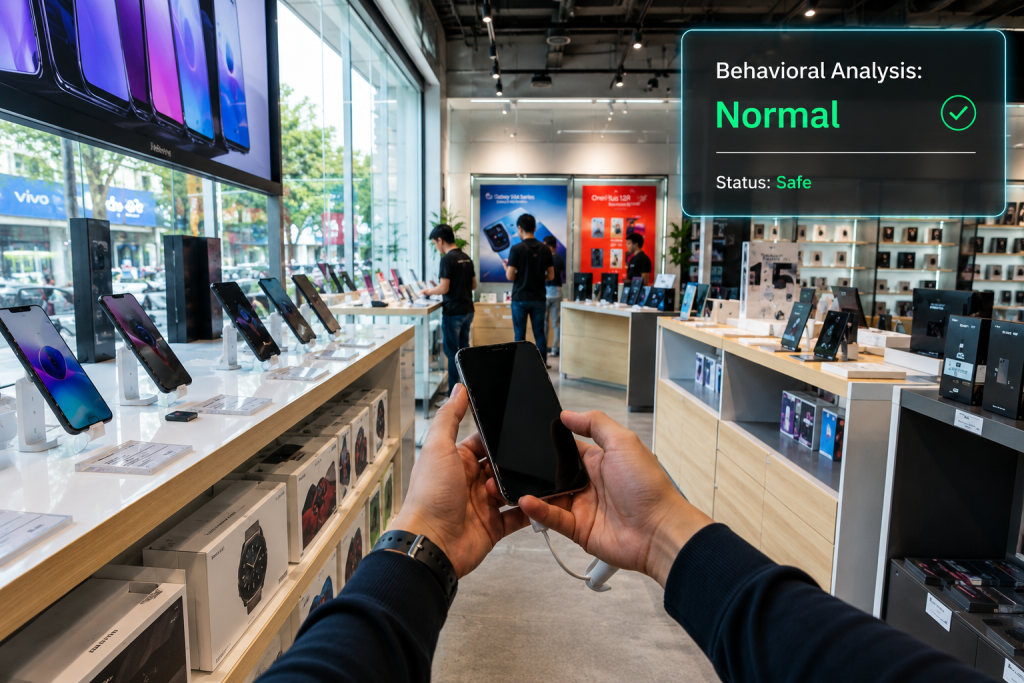
AI enables retailers to create invisible digital boundaries around high-value merchandise and sensitive operational areas. These virtual security zones help protect:
- Jewellery showcases
- Mobile phone and laptop displays
- Luxury watch counters
- Premium cosmetics
- Pharmacy storage
- Warehouse access points
- Cash handling areas
The system instantly creates an alert whenever someone enters a secured area without permission or stays there longer than anticipated, enabling security staff to act swiftly.
Learning Normal Store Behaviour
Advanced AI systems continuously learn normal activity patterns within each retail environment. This includes customer movement, checkout behaviour, employee workflows, peak shopping hours, delivery schedules, and routine store operations.
When activities deviate significantly from these established patterns, AI highlights them for review. This adaptive learning improves detection accuracy while reducing unnecessary alerts as the system becomes familiar with normal store operations.
Reducing False Alarms
Effective AI surveillance combines multiple behavioural indicators instead of relying on a single event. For example, simply picking up an expensive product is normal customer behaviour. But when repeated handling is followed by concealing, going into a low-visibility location, and trying to leave without going to the checkout, the entire risk level increases.
This multi-factor analysis improves detection reliability and helps security teams focus on genuine incidents.
Multi-Camera Intelligence
Large retail stores often operate numerous surveillance cameras. Instead than analysing each camera separately, AI aggregates data from several camera feeds to detect customer movement across various locations.
This unified view provides a clearer understanding of customer behaviour throughout the shopping journey, enabling more accurate detection of suspicious activities.
Supporting Security Personnel
AI is intended to assist security professionals, not to replace them. Before determining the best course of action, designated individuals can use live video to confirm the situation and receive real-time warnings when suspicious conduct is discovered.
By automating continuous monitoring, AI allows security staff to concentrate on genuine incidents, improving response times while increasing operational efficiency.
CAPASai: AI-Powered Shoplifting Prevention
CAPASai is an AI-powered video analytics platform that transforms existing CCTV systems into intelligent retail security solutions. By continuously analysing live surveillance footage, it detects suspicious activities, applies configurable business rules, and generates real-time alerts for store managers, security personnel, or centralized monitoring centres.
The platform supports jewellery stores, mobile phone retailers, luxury boutiques, electronics showrooms, pharmacies, and premium department stores without requiring camera replacements. In addition to intelligent monitoring, CAPASai provides centralized monitoring, operational dashboards, incident reporting, trend analysis, and customizable alert workflows that strengthen both security and operational control.
The Future of Intelligent Retail Security
Artificial Intelligence is transforming retail loss prevention by enabling businesses to identify risks as they develop instead of relying solely on recorded footage after an incident. As AI technology continues to advance, shoplifting detection will become even more accurate, adaptable, and efficient across different retail environments.
By combining intelligent video analytics with proactive monitoring, retailers can protect high-value merchandise, improve operational visibility, strengthen security processes, and respond to potential theft before it becomes a financial loss.